Tags
- Predictive Maintenance
- Artificial Intelligence
- Machine Learning
- Industry 4.0
- Condition Monitoring
- IIoT
As IIoT sensors and historian data have become commonplace across manufacturing sites, attention has shifted from simply collecting data to using it predictively. AI-driven predictive maintenance — using machine learning models trained on vibration, temperature, current draw and other condition-monitoring data — has moved from research projects to commercially available add-ons for mainstream SCADA and historian platforms.
Unlike traditional scheduled maintenance, predictive models flag developing equipment faults based on subtle pattern changes long before a fixed-interval inspection would catch them, reducing unplanned downtime and avoiding unnecessary maintenance on equipment that is still healthy.
The barrier to entry has dropped significantly: where this once required a dedicated data science team, several automation vendors now offer pre-built predictive maintenance modules that integrate directly with existing PLC and SCADA data, lowering the skill threshold for smaller manufacturers to adopt the technology.
The prerequisite remains the same as ever, however — reliable, well-structured data acquisition. No predictive model can compensate for noisy sensors or an inconsistent data logging strategy, which keeps solid SCADA and historian design at the centre of any Industry 4.0 initiative.
Services Used
Services Featured In This Post
Control Systems Design
Web SCADA Design
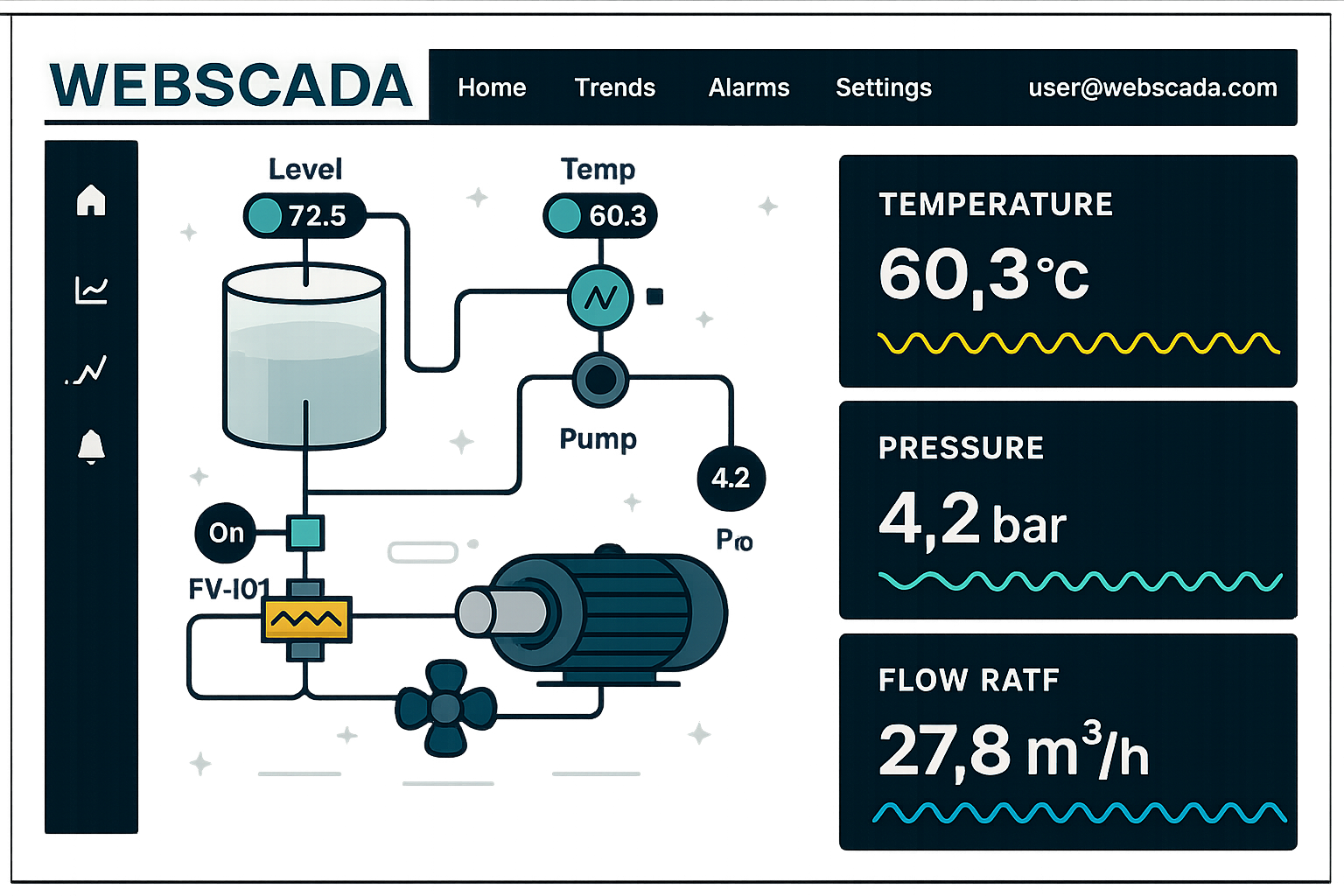
WebSCADA (Supervisory Control and Data Acquisition via web technologies) is a modern evolution of traditional SCADA systems. It allows operators to monitor and control industrial processes remotely through web interfaces, offering:
- Real-Time Visualization: Access dashboards from any device, anywhere.
- Scalability: Easily integrate new devices and expand system capabilities.
- Cost Efficiency: Reduces infrastructure and maintenance costs compared to legacy systems.
- Security & Accessibility: Implements secure protocols while enabling multi-user access across locations.
Industry 4.0 with IoT and WebSCADA empowers manufacturers to build smart factories that are agile, efficient, and future-ready. It’s not just a technological upgrade—it’s a strategic transformation.
Interested in Working With Us?
Let's discuss how IMSI can deliver a tailored solution for your project.
Get In Touch