Tags
- Web SCADA
- Cloud SCADA
- HMI
- Remote Access
- Mobile-Responsive Design
- Industrial Connectivity
Browser-based SCADA has gone from an alternative to the default assumption. Platforms built around a web-first architecture have taken meaningful market share from vendors still built around dedicated client software, largely by solving problems traditional SCADA vendors had left unaddressed for years: painless multi-site licensing, faster deployment, and clients that run on whatever device is already in someone's hand.
The interfaces themselves have caught up too. Modern web frameworks (React, Angular, Vue) let SCADA vendors build component-based, responsive screens that hold up on a tablet or phone as well as a control room monitor, rather than a desktop layout awkwardly squeezed onto a smaller screen. For operators who used to be tied to a fixed workstation, that's a real change in how they work, not just a cosmetic one.
Cloud SCADA has followed the same trajectory as browser-based HMI generally: what started as a way to give management a read-only dashboard is increasingly the primary way operators and engineers interact with the system day to day, with data hosted or orchestrated remotely and accessed securely from wherever the person happens to be.
For a client already running an older thick-client SCADA setup, the conversation has changed too — it's no longer "should we consider a web-based option," it's "which screens do we want accessible outside the control room first." That's the framing IMSI now starts from when scoping a Web SCADA Design project.
Services Used
Services Featured In This Post
Web SCADA Design
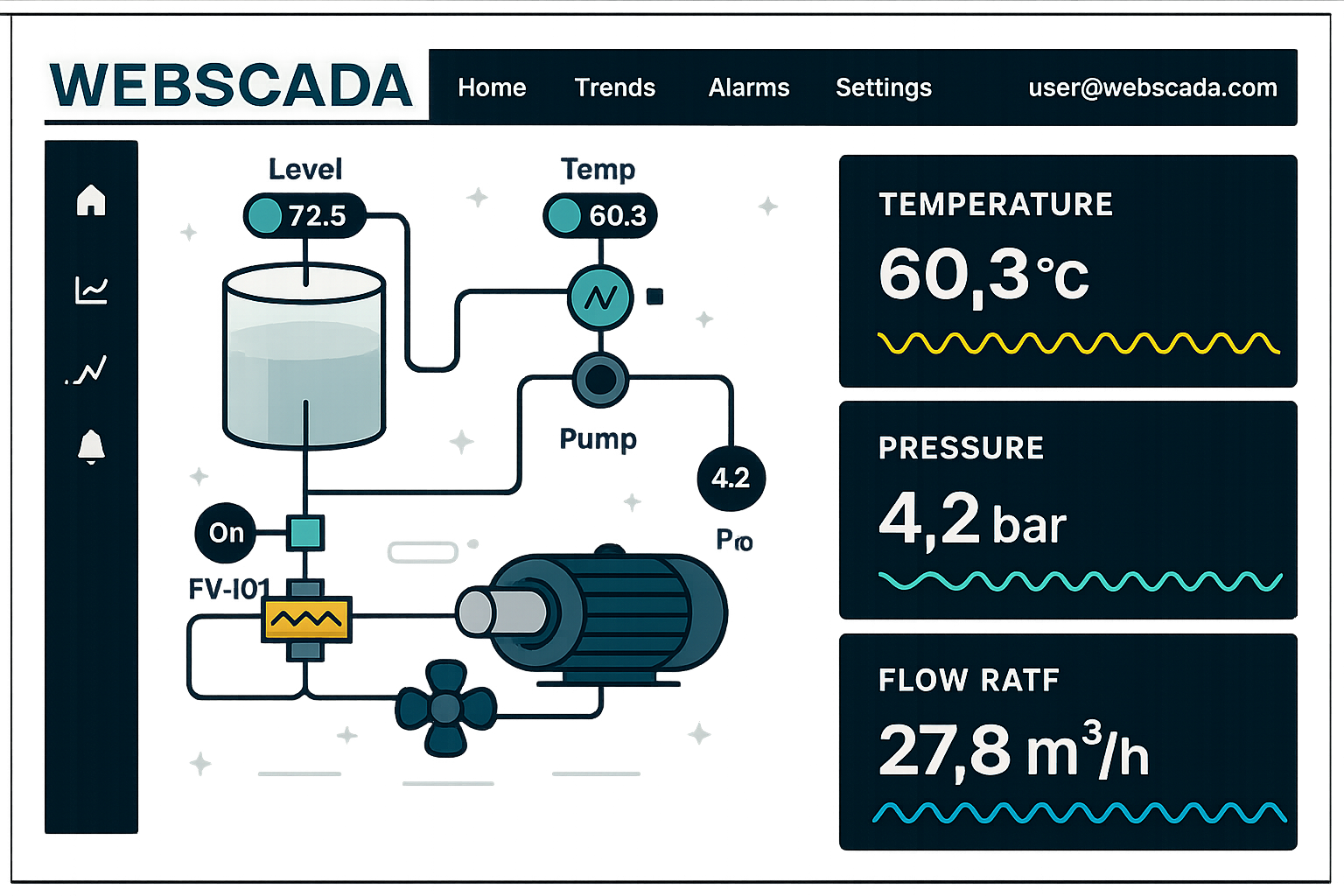
WebSCADA (Supervisory Control and Data Acquisition via web technologies) is a modern evolution of traditional SCADA systems. It allows operators to monitor and control industrial processes remotely through web interfaces, offering:
- Real-Time Visualization: Access dashboards from any device, anywhere.
- Scalability: Easily integrate new devices and expand system capabilities.
- Cost Efficiency: Reduces infrastructure and maintenance costs compared to legacy systems.
- Security & Accessibility: Implements secure protocols while enabling multi-user access across locations.
Industry 4.0 with IoT and WebSCADA empowers manufacturers to build smart factories that are agile, efficient, and future-ready. It’s not just a technological upgrade—it’s a strategic transformation.
Interested in Working With Us?
Let's discuss how IMSI can deliver a tailored solution for your project.
Get In Touch