Tags
- Humanoid Robots
- Physical AI
- Warehouse Robotics
- Agility Robotics
- Automation ROI
Humanoid robots have moved this year from trade-show demonstrations to structured pilots in live warehouses. Agility Robotics, Figure AI and Apptronik are all running commercial trials, with Agility Digit working at GXO Logistics among the most closely watched. The tasks so far are simple, repetitive and physically demanding, such as moving totes.
Analysts are cautious about the return on investment. AMRs, AS/RS, robotic picking, sortation and goods-to-person systems continue to deliver measurable productivity gains, and humanoids are not expected to replace them. The current view is augmentation, filling gaps that fixed automation does not economically reach.
Whatever the form factor, the robot still needs instructions. Humanoids and other new machines depend on warehouse execution and management systems to receive tasks, confirm movements and keep inventory accurate, which makes the orchestration layer even more important.
Our advice to clients is to treat humanoids as another resource the WMS must be able to direct, and to keep the architecture open enough to add them if the economics start to work.
Services Used
Services Featured In This Post
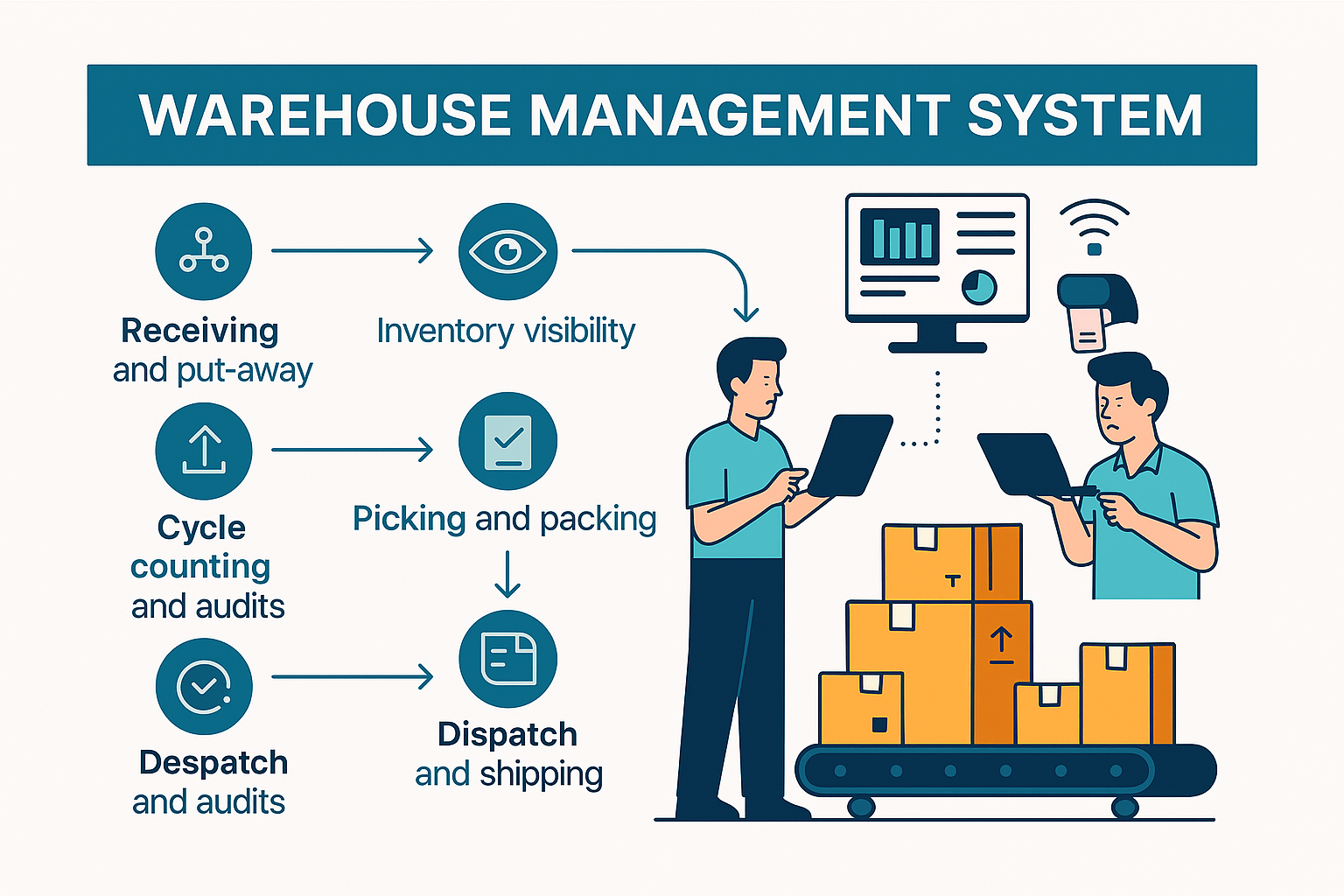
Warehouse Management System
A warehouse management system (WMS) coordinates the flow of goods, data, and operations inside a warehouse so inventory moves with accuracy, speed, and traceability. It acts as the operational backbone for modern supply chains, connecting people, equipment, and digital systems into one coordinated environment.
Core functions
- Inventory visibility — Tracks every item’s location, quantity, and movement in real time, reducing stockouts and overstocking.
- Receiving and put‑away — Guides operators through optimized storage locations to minimize travel time and improve space utilization.
- Picking and packing — Supports batch, wave, zone, and automated picking strategies to increase throughput and reduce errors.
- Order management — Prioritizes and sequences orders based on deadlines, carrier schedules, and resource availability.
- Dispatch and shipping — Ensures correct labeling, documentation, and carrier integration for smooth outbound logistics.
- Cycle counting and audits — Maintains inventory accuracy without shutting down operations.
Interested in Working With Us?
Let's discuss how IMSI can deliver a tailored solution for your project.
Get In Touch