Tags
- WMS
- WES
- Warehouse Orchestration
- Warehouse Automation
- System Integration
Analysts covering the 2026 WMS market agree on one theme: software orchestration matters more than adding more robots. The warehouse management system is shifting from a transactional system of record to a coordination layer that directs work across people, conveyors, robots and other digital systems.
As a result, the traditional line between WMS and warehouse execution systems (WES) is blurring. The aim is a layered architecture in which the ERP remains the system of record, the WMS and WES orchestrate, and a mobile layer gives workers timely, validated instructions. The alternative is what some commentators call an automation Frankenstack, with each robot or sorter vendor running its own isolated logic.
Vendors are responding. AutoStore, for example, has positioned its new cloud platform to run alongside existing WMS and WES products instead of replacing them, reflecting a wider move toward open, interoperable architectures.
For our warehouse clients, this reinforces a design principle we already follow: define the integration and orchestration layer first, so new automation can be added later without rewriting the WMS.
Services Used
Services Featured In This Post
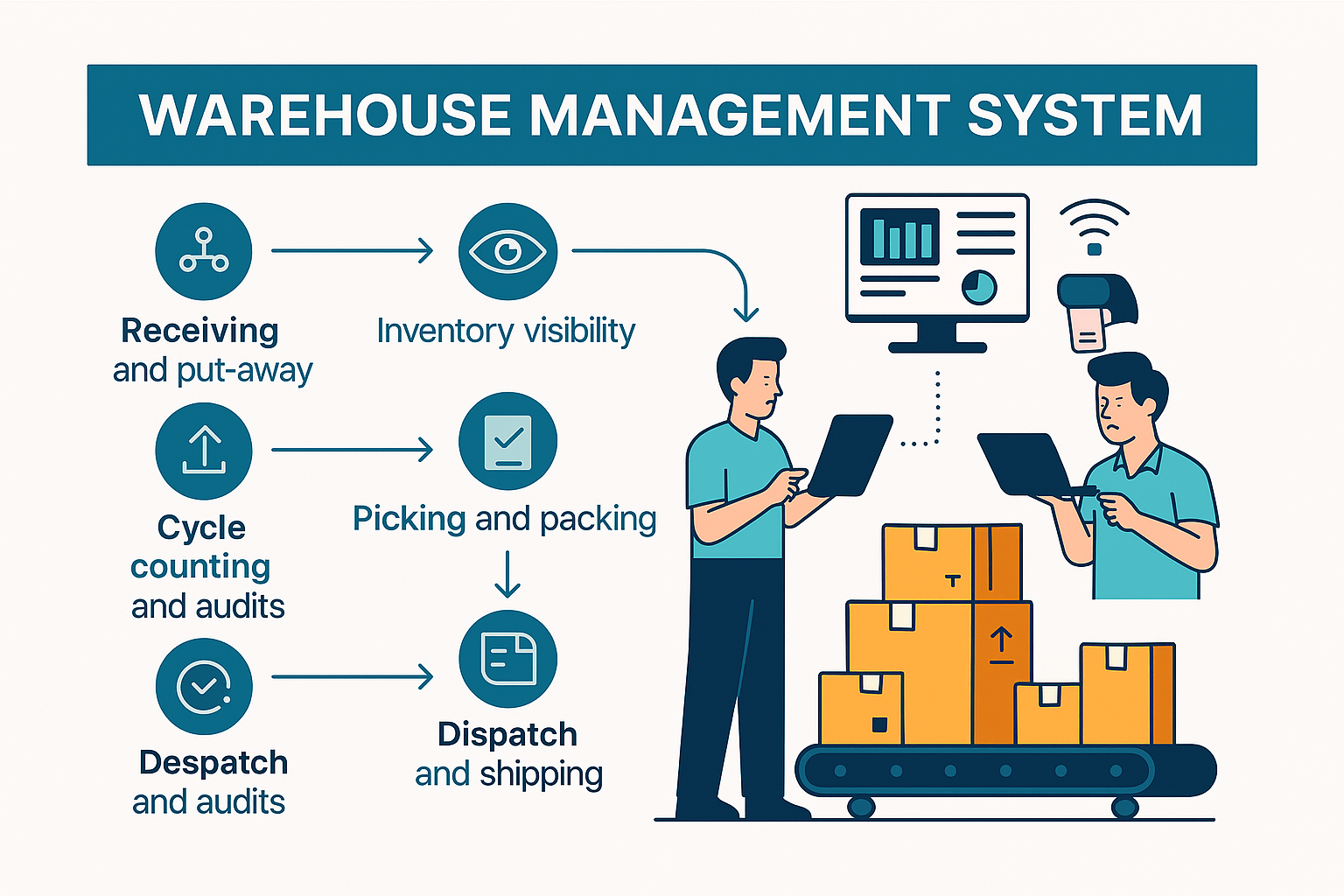
Warehouse Management System
A warehouse management system (WMS) coordinates the flow of goods, data, and operations inside a warehouse so inventory moves with accuracy, speed, and traceability. It acts as the operational backbone for modern supply chains, connecting people, equipment, and digital systems into one coordinated environment.
Core functions
- Inventory visibility — Tracks every item’s location, quantity, and movement in real time, reducing stockouts and overstocking.
- Receiving and put‑away — Guides operators through optimized storage locations to minimize travel time and improve space utilization.
- Picking and packing — Supports batch, wave, zone, and automated picking strategies to increase throughput and reduce errors.
- Order management — Prioritizes and sequences orders based on deadlines, carrier schedules, and resource availability.
- Dispatch and shipping — Ensures correct labeling, documentation, and carrier integration for smooth outbound logistics.
- Cycle counting and audits — Maintains inventory accuracy without shutting down operations.
Interested in Working With Us?
Let's discuss how IMSI can deliver a tailored solution for your project.
Get In Touch